Island Peak Climb from Chhukung

149 reviews
54 reviews
Recommended by 99% of travelers
At a Glance
Duration
3 Days
Trip Grade
Moderate to Strenuous
Country
Nepal
Maximum Altitude
6,189m
Group Size
1 - 10
Starts
Chhukung
Ends
Chhukung
Activities
Climbing
Best Time
Sept - Nov and Mar - May
Overview

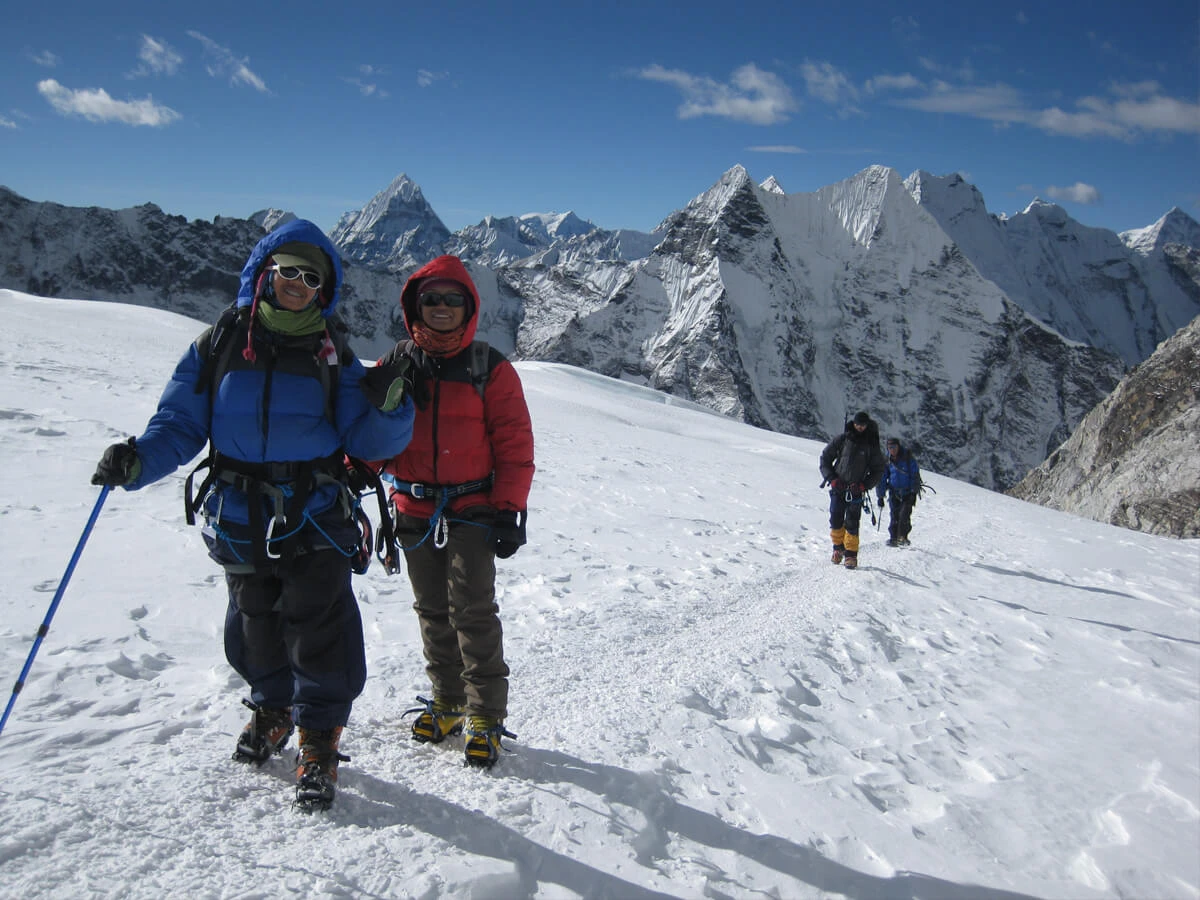
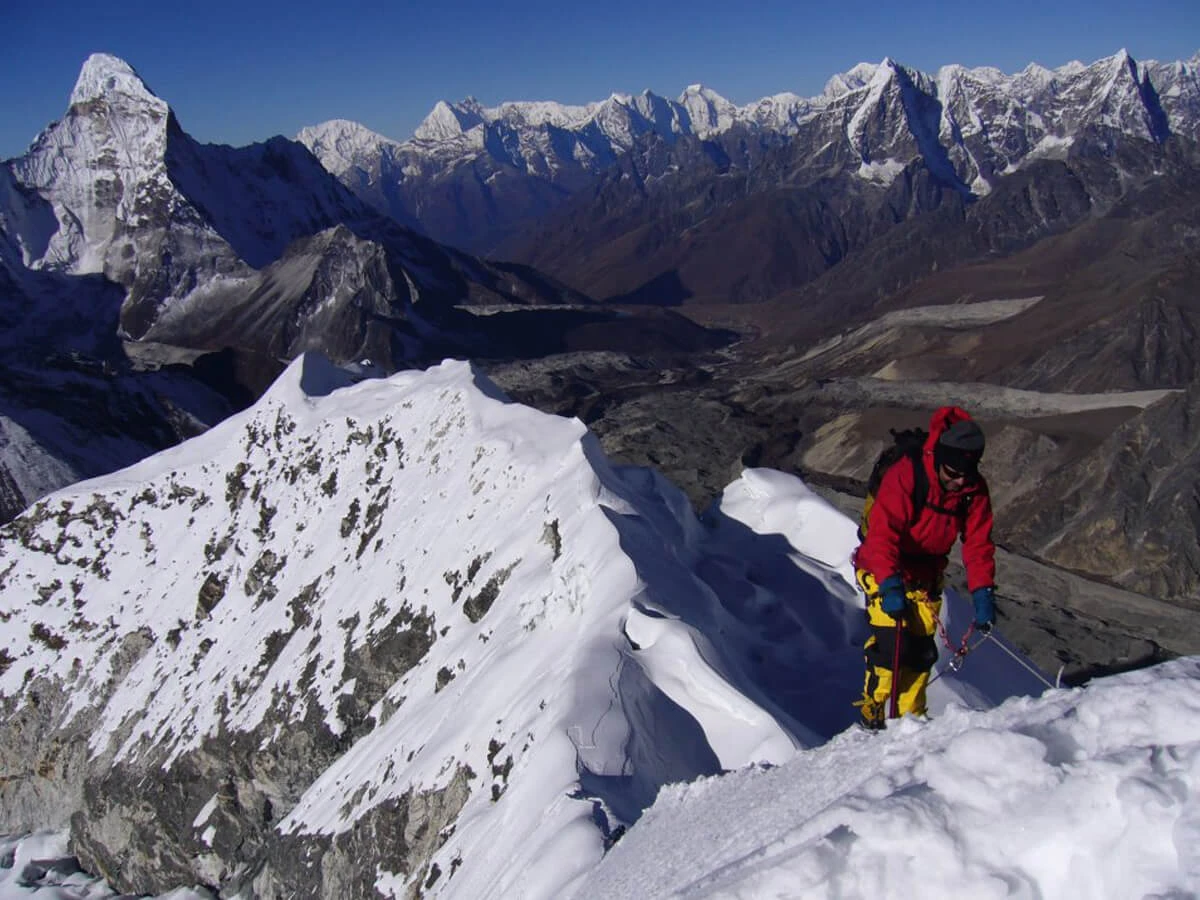
Island Peak (Imja Tse) is one of the most popular trekking peaks in the Everest region, at an elevation of 6,169 meters, located between Mt. Ama Dablam and Lhotse. The Everest Expedition team, led by Briton Eric Shipton, made an epic journey to the top of the Imja Tse Peak in 1952 for the first time; since then, it has become the most legendary peak in Nepal. Lhotse Glacier, Imja Glacier, Amphulapcha Glacier, Chhukung Glacier, and Ama Dablam Glacier all surround Imja Tse. He named it Island Peak because it sits in the middle of the glacier, resembling an island in a sea of ice. Now it is known as Island Peak.

The Island Peak Trip fulfills every adventure trekker’s dream, for those who like to dream of some adventure trip beyond the Everest Trek. It can combine the Everest Base Camp Trek, Gokyo Chola Pass, Everest Three Passes, and Everest Classical Trek. This tour helps acclimatize your body to conquer the top of the peak. We at Nepal Mother House Treks organize an Island Peak climbing trip from Chhukung, but we are glad to sort out this trip combined with any other trip to Everest according to your requirements. The Island Peak summit is wonderful with a 360-degree view of the pyramid-shaped Makalu (8,757 m), the pointed Shar (8,393 m), Lhoste (8,501 m), Nuptse (7,861 m), Ama Dablam (6,856 m), Baruntse (7,168 m), and many other mountains. A small col separates the west face from the South Ridge of Lhotse Shar and the highly glacierized Lhotse Glacier from which it rises. To climb this peak does not require previous climbing experience, but essential physical fitness and mental preparedness. Island Peak climbing is rated as a moderate grade, and it is known as a novice climber’s.

The trip starts from Chhukung village, where you will meet our Sherpa guide/porter, who will give brief instructions about the trip plan. You have the option to walk to Chhukung by yourself, either from Jiri, Salleri, or Lukla, or if you need assistance, we are happy to organize a full trip also. We propose the 3-Day Island Peak Climbing Itinerary from Chhukung for your better option.  option.  The trail passes through the glacier moraine originating from Lhotse, continues to the Imja Khola (stream), and leads to the Island Peak Base Camp at an elevation of 5,200 m. There are slabs and boulders near High Camp (5,600 m), and the trail becomes harder from here up to the summit; it requires mountaineering skills for the 300 meters on a snowy ridge, using ropes, crampons, and ice axes. Finally, you will conquer the top of Island Peak, making history in your life. Then descend to Chhukung for your destination.

Island Peak (Imja Tse) climbing takes 1 night and 2 days as appropriate time, but we recommend you put in an extra day for the contingency of weather.  We at Nepal Mother House Treks are glad to organize Island Peak (Imja Tse) climbing trips by expert Sherpa guides and porters according to your requirements and schedule, either for solo travelers or group joins. It can be organized the whole year round, but mid-September to mid-November and mid-March to mid-May are the best times for this adventure.

Highlights

  • The Most Famous Trekking Peak in the Everest Region.
  • 360-degree mountain scenery.
  • Amazing climbing by expert Sherpa Local Guide and Porters.
  • Known as a novice climbers’ peak.
  • Located at Sagarmatha National Park.
  • Can do it in batter 2 days from Chhukung.
  • Fulfill the dream of adventure lovers.
Day-to-day

Island Peak Climb from Chhukung Itinerary

Starts: ChhukungEnds: Chhukung

About 2 to 2 and a half hours' walk from Dingbuche, you will reach a small settlement called Chhukung. You will get to meet our climbing guide. We will provide you with our guide’s contact details, including their mobile number and the tea house where they are staying for the meeting. After introducing themselves, the guide will provide brief instructions about the trip itinerary, climbing route, and technical aspects, such as how to use climbing gear, safety procedures, other rules and regulations for climbing, and checking your climbing gear to ensure everything is properly organized. If you need personal gear, our guide will assist you with the rental process. You will need to bring a sleeping bag, down jacket, gloves, and Gore-Tex pants. Stay overnight at Chhukung. Please, pay all your expenses by yourself at Chhukung. The peak climbing package will be available startinga  from the base camp only.

Day Highlights

Today your adventure trip to the Island Peak begins. After breakfast, the trip starts around 7–8 AM from Chhukung. Out of the village, the trail climbs steeply up to the south, turns east, and enters the main trail in Imja Valley. Then continue through the pleasant walk along a bank of Imja Khola and meet glacier marine get to the big rock. You will see another route on the right side that leads to the Amphu Lapcha Pass, which stretches in a southeast direction. But you will catch the lift route to the north for the Island Peak Base Camp. The path is a challenging trail through the Imja and Lhotse glacier moraines. Then the trail leads you to a wide valley flanking Island Peak, where we will set up our base camp at an elevation of 5,200 m.

If you need pre-climb training, you may participate. Our expert climbing guides will give you training on peak climbing techniques and the proper ways of using each and every piece of climbing gear, such as the ice axe, climbing boots and crampons, harness, ascender, etc. You will know how to use ropes to go up and down and to secure other roles. It is not compulsory to have prior training for Island Peak Climbing, even though we strongly believe that this training will boost your confidence and climbing skills, which will help you get to the summit of the peak, as well as fully enjoy the entire trip. The rest of the day, you may hike to High Camp (5,600 m) and back or rest for the next day’s climb. You will stay overnight in a tented camp at base camp.

Day Highlights

Today is quite a big day for you. You need to wake up around midnight, at 12 to 1 am, and have breakfast before beginning our climb. It is important that we reach the summit before noon to avoid strong winds in the afternoon. Sometimes the strong winds might be a hurdle to a successful summit. As this is a climbing trip, you need to use climbing techniques and tools where required. 

Anyway, after Base Camp, the trail strikes off the steep hillside for several hundred meters. At first, it's a sandy trail, and it turns to grass before reaching the boulder-strewn area. You will see the slope trail further ahead, which leads to a steep rock channel. There are several short rock steps before emerging on the right side of the rock gully. You may not feel that much difficulty climbing.

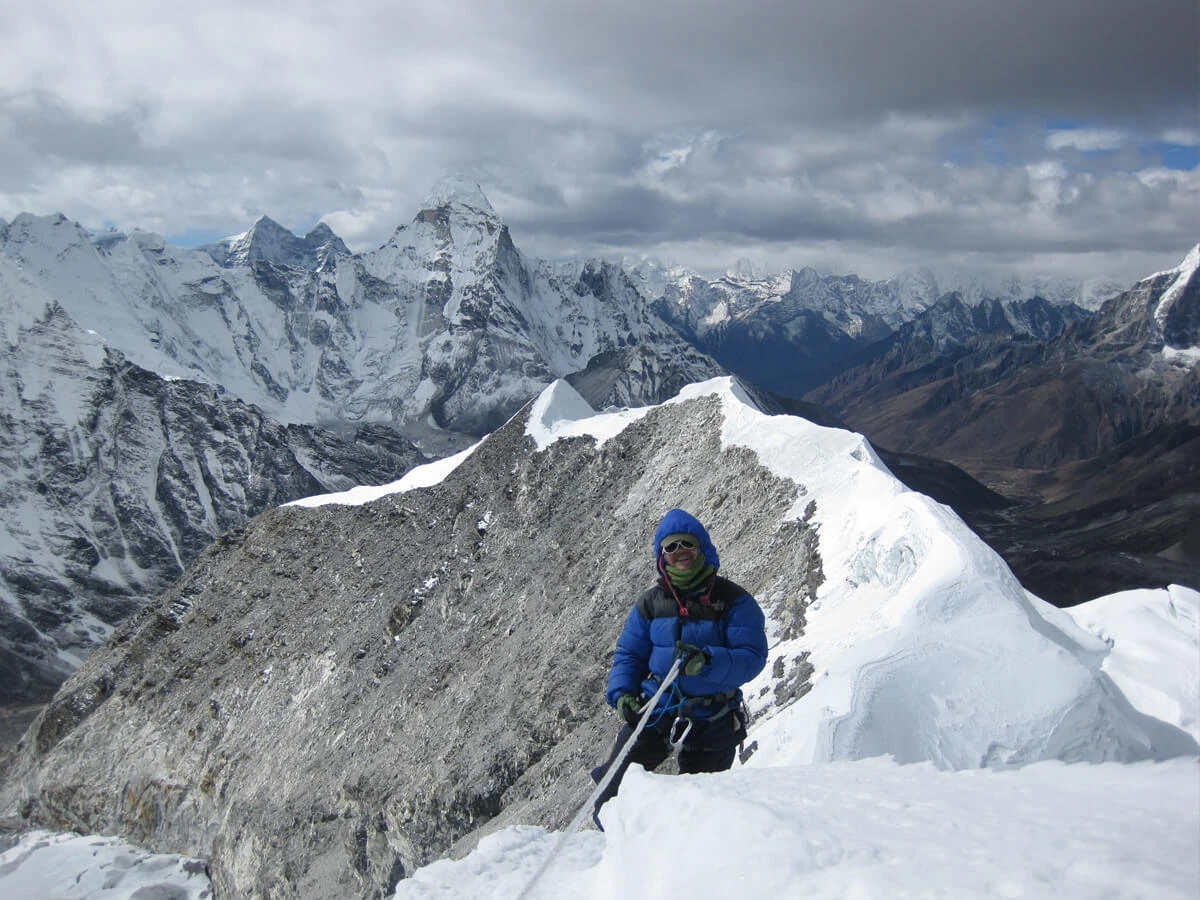
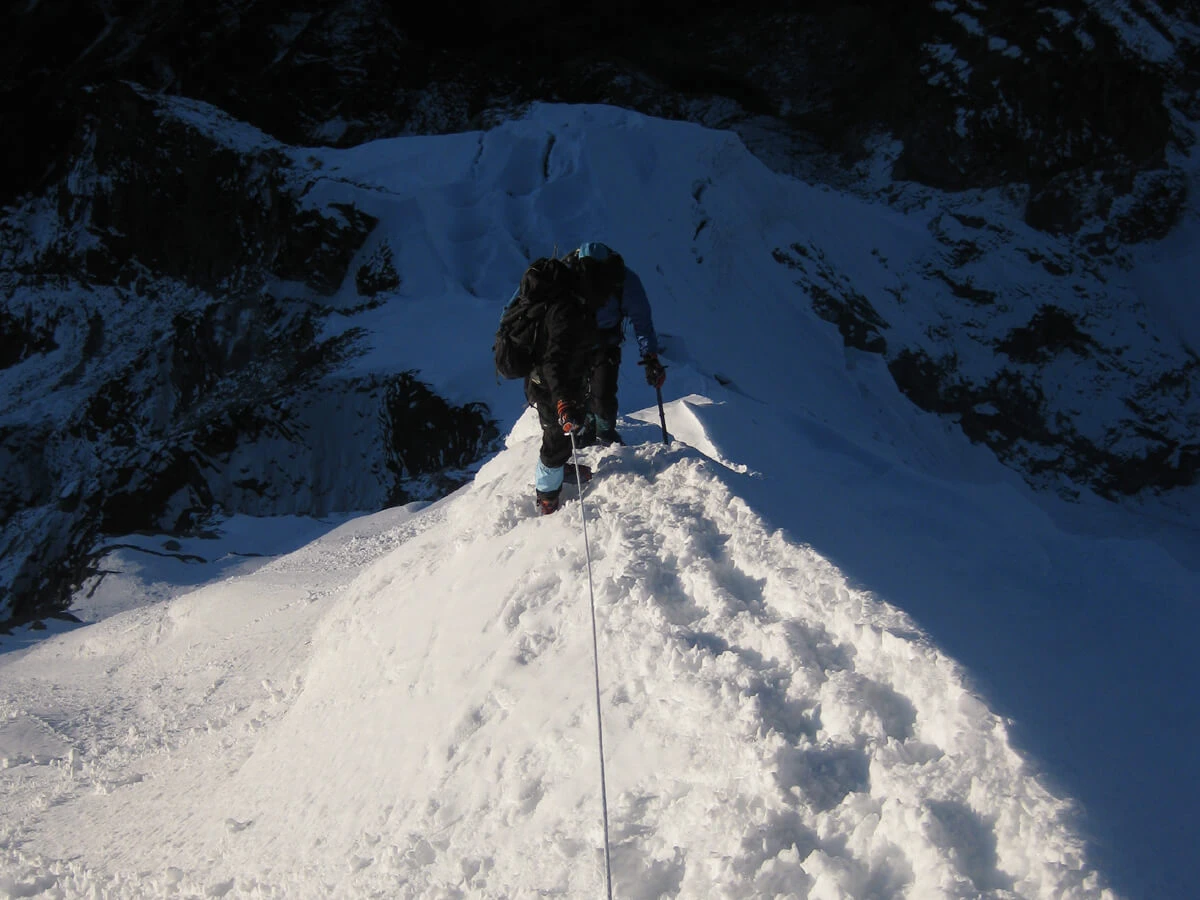
After this, the trail follows a ridgeline to the summit through the glacier snout, with an exciting journey. Our guide will fix the rope if needed from here, and you need to use the fixed rope and the man rope for safety.

Normally, the fixed rope needs about 350 meters; the length depends on the climbing season and crevasses. Recently, there are appear two new crevasses with approximately 3 ½ to 4 meters long. To cross these crevasses, we will use ladders.

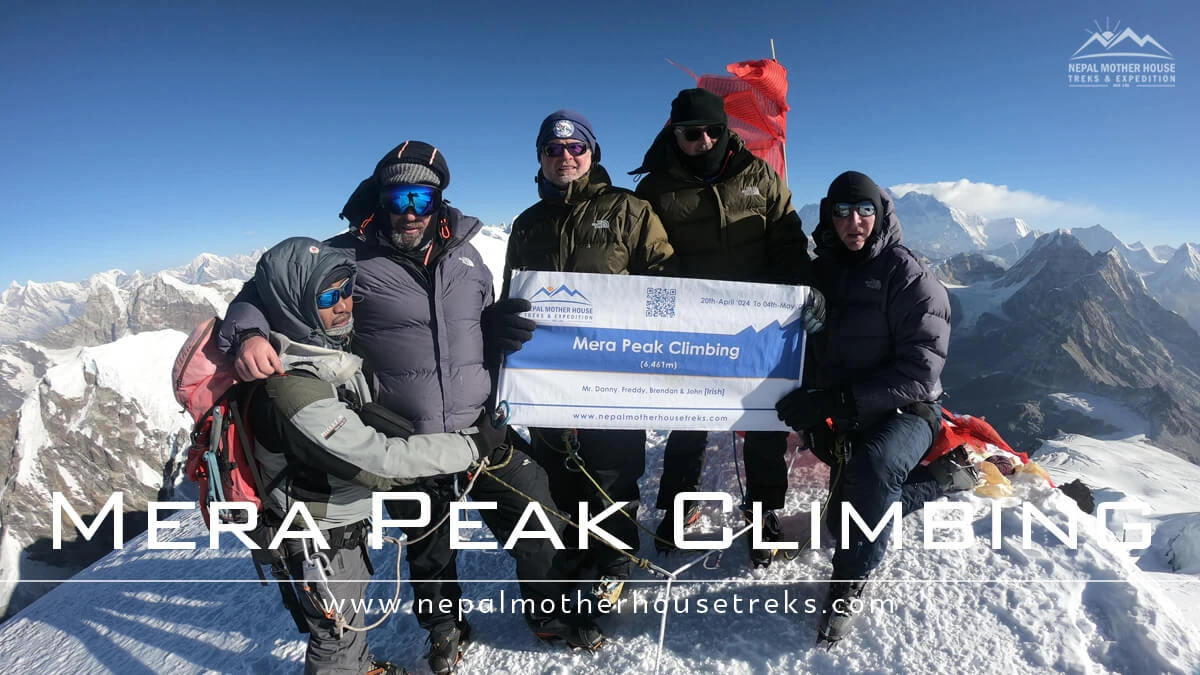
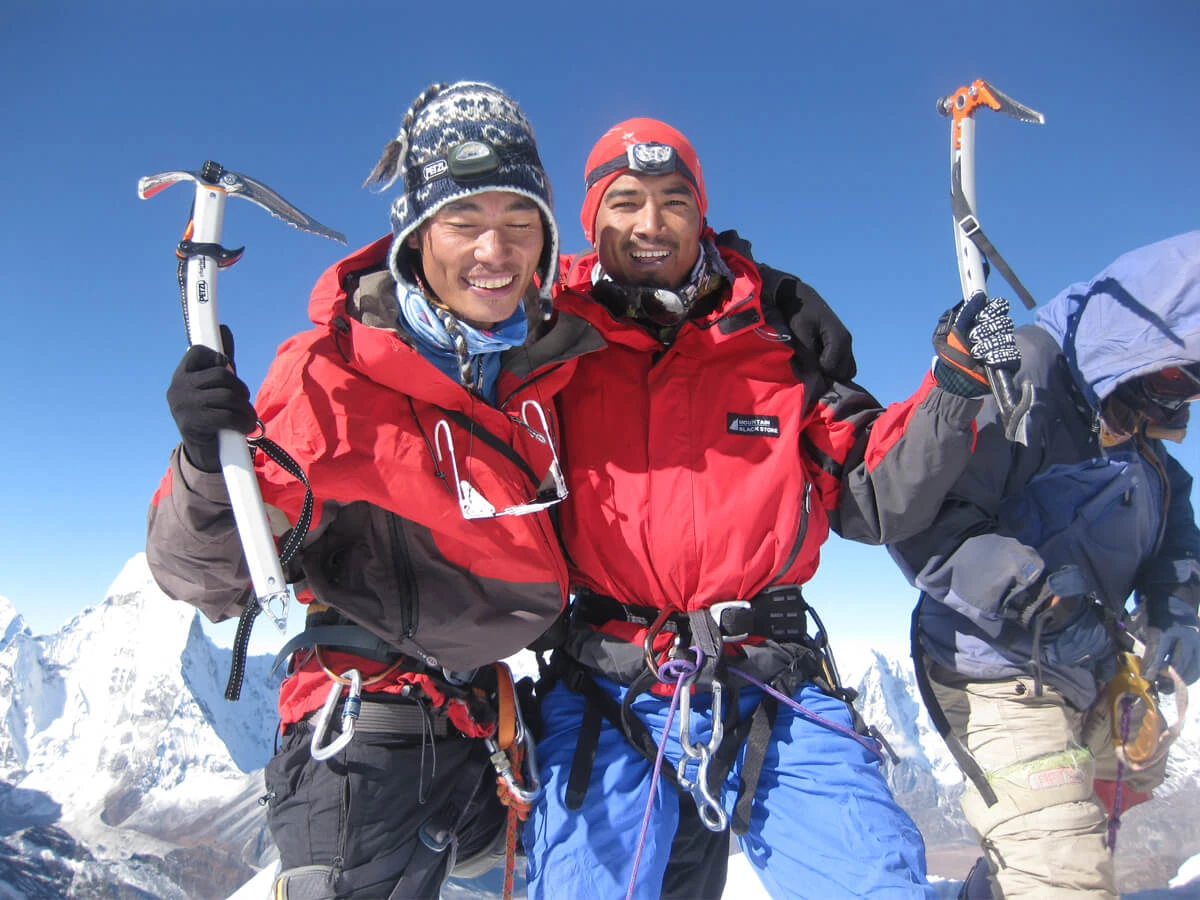
Finally, a steep snow slope leads you to the summit of Island Peak (6,189 m). Spending some time on the top with some pictures and joy, we will descend to the Island Peak Base Camp, where some of our crew are waiting for us. We will celebrate our successful climbing with the entire team. And walk back to Chhukung for your overnight stay, and be free for your other destination.

Day Highlights
Custom Adventures Await
For over 15+ years, we have been pioneers in small group adventure travel, transforming how travelers experience the Himalayas. Discover how we are shaping the future of travel.
Included

Island Peak Climb from Chhukung Cost Details

Includes

  • Pre-trip meeting in Kathmandu
  • Pre-climbing training at Island Peak Base Camp
  • Kitchen equipment, camping tents, dining tents, kitchen tents, toilet tents, tables and chairs, and mattresses for Island Peak Base Camp
  • Equipment [climbing boots, crampons, helmet, ice axe, harness set (harness, safety rope, 8-finger, ascender/Jumar, 2 locked C/two locking carabiners, BC service), food three times, tented camp], climbing guide.
  • Professional Climbing Guide Chhukung to Chhukung
  • Personal insurance, Food, accommodation, wages, and equipment for our staff
  • Climbing peak permit, Garbage deposit fees, and other necessary fees
  • Packed Lunch for summit day
  • Achievement certificate (if you want) 
  • All our services charge government taxes locked

Excludes

  • Sleeping bag, down jacket, gloves, and Gore-Tex pants (you can rent them in Chhukung).
  • During the trek, a variety of cold and hot drinks are available, including soft and hard beverages such as drinking water, tea, coffee, and chocolate, as well as snacks like cookies and dessert. Additionally, laundry services, Wi-Fi, battery charging, oxygen, and hot showers are provided.
  • Clients' travel insurance and evacuation (compulsory).
  • Accommodation and meals in Chhukung
  • Porter services to carry your personal or climbing gear for the entire trip
  • In case of a flight cancellation, you will require a charter helicopter or plane.
  • For tipping ideas for climbing guides, USD 100 minimum is considered fair; however, this is from your inner heart.
  • Your meals and accommodation in Kathmandu.
  • Personal expenses like shopping, souvenirs or gifts, and personal mountaineering gear.
  • We exclude optional trips and sightseeing, as well as donations and entrance fees for the school or monastery.
  • The cost of international airfare, airport departure tax, and visa fee is not included.
  • Any services not listed above are not included in the trip cost.
  • Visa fee: You obtain a visa easily upon your arrival at Tribhuwan International Airport in Kathmandu.
     
Availability

Departure Dates

Except fixed departure date, we have every day departure according to your requirements.

Are you looking for a Private Trip?
WhatsApp or Call 24/7 @
+977 9841368753
Good to Know

Essential Information

Few things are worth arranging while you are at home. Please note down these list details before your departure. These tips will help to make your trip enjoyable:

  • Read travel advice, inform yourself before traveling, and get advice locally when you arrive.
  • Make sure your passport is valid during your travel and consult about visa processing.
  • Estimate your budget and fixed holiday period, then choose a suitable destination.
  • Note down the travel checklist before leaving home and prepare accordingly.
  • Inform your friends and family about your trip and itinerary details.
  • Make copies of your important documents as a backup in case you lose the originals.
  • Buy the Guide book and study Nepal’s general information (culture, customs, politics, people, geography, weather, festivals, religion, rules, and regulations).
  • Buy insurance that will cover all overseas medical and emergency evacuation costs.
  • It's better to know at least a few Nepali words while traveling in Nepal.
  • Make reservations with advance payment, especially during peak season, for trips, accommodations, and local guides.
  • Call your bank for debit and credit- cards to let them know about fees and your travel destination. Get your bank’s emergency phone number if you have a problem.
  • Visit the doctor for your health report and take medicine and vaccines accordingly.
  • Remember, the local laws apply to you as a visitor, and it is your responsibility to follow them.
  • Be sensitive to local customs, traditions, and practices, as your behavior may be seen as improper, hostile, or even illegal.
  • Never step over anyone's feet/legs, and pull in your legs when somebody wants to pass.
  • Never touch anybody with your feet, and also never point in a direction using your feet. The feet are considered the most impure part of the body.
  • When entering somebody's kitchen, temple, or monastery, take off your shoes.
  • As a woman, you should always be dressed, avoiding provocation, so keep your shoulders and legs covered.
  • It is very polite to give and accept with your right hand, and even more so when you use your left hand to support the elbow of your right hand.
  • When in doubt about how to behave in certain situations, keep a low profile, do not shout, and keep your dignity.
  • It is better not to touch offerings or persons when they are on their way to shrines.
  • Beef is prohibited among both the Hindus and Buddhists. No female animal is killed for food.
  • You may not be allowed entry to the inner sanctuaries of temples and stupas.
  • You may be interested in taking snaps of temples, stupas, and monuments. Generally, temples, stupas, and monuments are permitted to be photographed, but it is better to have permission before using your cameras. 

For more details, please visit Nepal Travel Tips.